


$6 Billion Tanker Bet Materializes – Sinokor Maritime Secures Outsized Shipping Gains
Source:Beyond Shipping
2026-08-20
Among the many investment moves in the shipping market in recent years, South Korean shipowner Sinokor Maritime's large-scale tanker acquisition strategy has become a phenomenon-level industry investment case, delivering exceptionally impressive market returns.
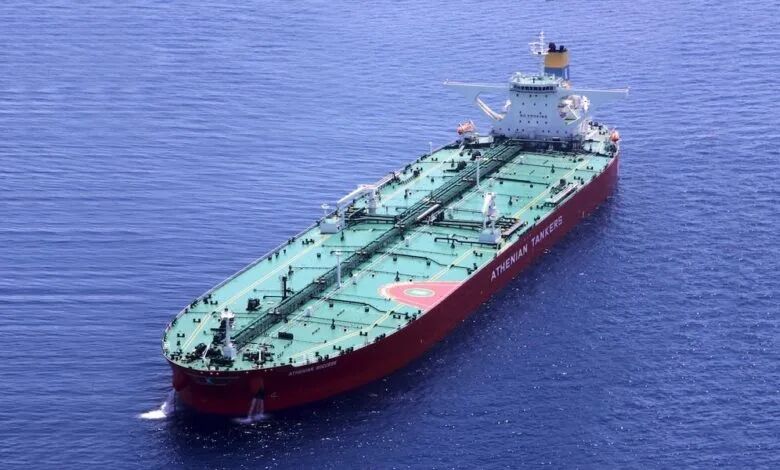
Statistics from ship valuation agency VesselsValue show that Sinokor Maritime firmly topped the second-hand tanker acquisition market in 2026, purchasing a total of 73 tankers throughout the year, with total investment reaching $5.925 billion. This investment volume equals the combined capital spending of the other eight largest tanker-purchasing shipowners within the same period. As the situation in the Strait of Hormuz reshapes the profit landscape of the very large crude carrier (VLCC) market, Sinokor Maritime has built a competitive advantage that is difficult for peers to match through this major deployment.
VLCCs are the core target of Sinokor Maritime's current fleet expansion. Since November 2025, the company has entered a rapid vessel-accumulation mode, precisely seizing the upward cycle in which the tanker market has long maintained six-figure daily earnings. After this round of concentrated acquisitions, the company now controls approximately 10% of the global VLCC fleet capacity, significantly enhancing its industry influence.
Behind this major acquisition spree lies strong capital backing from shipping industry heavyweights. Early this year, reports emerged that Gianluigi Aponte, founder of Mediterranean Shipping Company (MSC), had provided financial support for Sinokor Maritime's VLCC deployment, and subsequent public information has corroborated this. Competition regulatory filings show that MSC's subsidiary SAS Shipping Agencies Services agreed to acquire a 50% stake in Sinokor Maritime, co-controlling the company with South Korean shipowner Ga-Hyun Chung. The transaction received approval from Greek competition authorities in June.
Persistent security risks in the Strait of Hormuz have significantly reduced the number of compliant shipowners eligible to operate in the Persian Gulf route, directly driving up VLCC charter rates on the key Middle East-to-China route, with daily earnings on this route recently climbing to $510,000. Market charter data shows that a single voyage charter for one of Sinokor Maritime's vessels on the Persian Gulf-to-China route commanded $31 million; another vessel charter concluded by the shipowner this month also approached $500,000 per day in earnings.
VesselsValue analysis points out that Sinokor Maritime's concentrated acquisition activity, combined with the geopolitical crisis in the Strait of Hormuz reshaping global tanker route configurations, has significantly pushed up the asset premium for vessels capable of flexibly adapting to volatile routes, driving global VLCC asset prices to their highest levels since the 2008 financial crisis.
Looking at the full-year tanker investment rankings, Sinokor Maritime's $5.925 billion investment scale stands far ahead, creating a substantial gap from other industry participants. Among them, ICBC Financial Leasing ranks second with $1.15 billion in investment, followed by ADNOC Logistics & Services with $987 million, Bank of Communications Financial Leasing with $917.8 million, and Frontline with $875.7 million.
This ranking reveals that Chinese-funded leasing companies occupy the majority of positions, reflecting the fact that most second-hand vessel transactions currently adopt sale-and-leaseback structures, rather than being simple direct transfers of actual vessel control in the traditional sense.
At present, the industry's core focus is on the market direction after the situation in the Strait of Hormuz normalizes.
A market report released by VesselsValue indicates that Sinokor Maritime's acquisition pace will be entirely determined by the evolution of the Hormuz situation. With current VLCC asset prices already at multi-decade highs, the market is likely to enter a phase of steady adjustment going forward, and the pace of investment expansion will correspondingly slow down. However, for shipowners holding older tonnage, before the market correction materializes, the current period still represents the optimal window for fleet renewal and capacity structure optimization.
Hot News