


The world's largest dry port is actually in the United States
Source:GANGKOUQUAN
2026-08-18
It is widely known that the combined annual throughput of all U.S. seaports is only slightly higher than that of the Port of Shanghai alone. Yet the world's largest dry port is located in the United States. The Chicago land port is the logistics artery of North America and the world's largest comprehensive inland port and multimodal hub in terms of scale and throughput capacity.
Chicago has long been known as America's railroad capital. It is the only city in the U.S. that serves as a junction for all six Class I railroads—BNSF, Union Pacific, CSX, Norfolk Southern, CN, and CPKC—all of which have a major presence here. (In the United States, railroads are privately operated and classified by size into Class I, II, and III; the current annual revenue threshold for Class I railroads is $1.05 billion.)
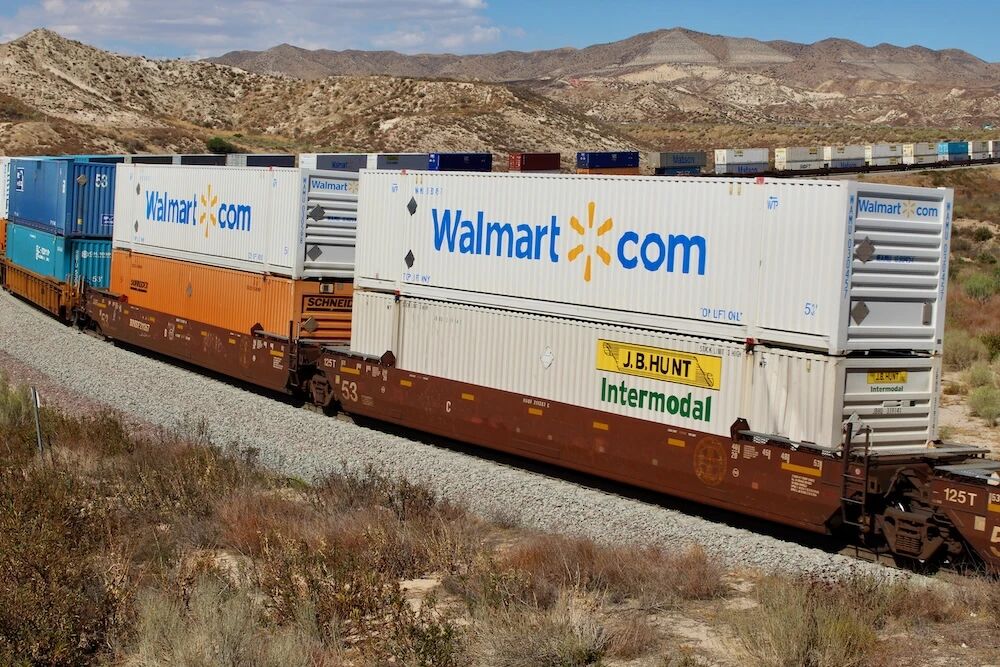
North America has a highly developed intermodal system, with a mature double-stack rail container operation. About 25% of all U.S. freight trains and 50% of intermodal trains pass through the greater Chicago area, making it the most critical hub connecting the eastern and western rail networks of the North American continent. Moreover, the Chicago land port connects eastward to the Great Lakes and the St. Lawrence Seaway, southward to the Mississippi River waterway system, and benefits from top-tier highway networks and O'Hare International Airport's air cargo hub, achieving seamless "rail-road-water-air" integration.
The Chicago land port handles 7 to 8 million container lifts annually, and these are all 53-foot intermodal containers. Converted to TEU equivalents, the annual throughput reaches about 16 million TEUs—surpassing 99% of the world's seaports and ranking it directly among the top ten globally.
It is said that the Xi'an land port is also aiming to become the "world's number one inland port." After three phases of expansion and upgrading, the Xi'an International Port Station now covers 3,733 mu (about 560 acres) and has 59 rail operation lines, of which 18 are dedicated to international container arrivals and departures, with a designed annual throughput capacity of 5.4 million TEUs. Xi'an International Port Station is the first station in China to have handled over 30,000 China-Europe freight trains, and it ranks first nationwide in key metrics such as train volume, cargo volume, and heavy container ratio. Looking ahead, do you think Xi'an's land port has a realistic chance of catching up to Chicago's?
Hot News