


International Maritime Organization (IMO) Secretary-General appeals to member states: Stop attacks on commercial ships and seafarers
Source:Beyond Shipping
2026-09-22
Recently, Arsenio Dominguez, Secretary-General of the International Maritime Organization (IMO), called on member states not to take actions that endanger the safety of commercial ships and put the lives of seafarers at risk.
At the meeting of the IMO's Sub-Committee on Carriage of Cargoes and Containers, the Secretary-General issued a warning about the serious impact of geopolitical tensions on the shipping industry.
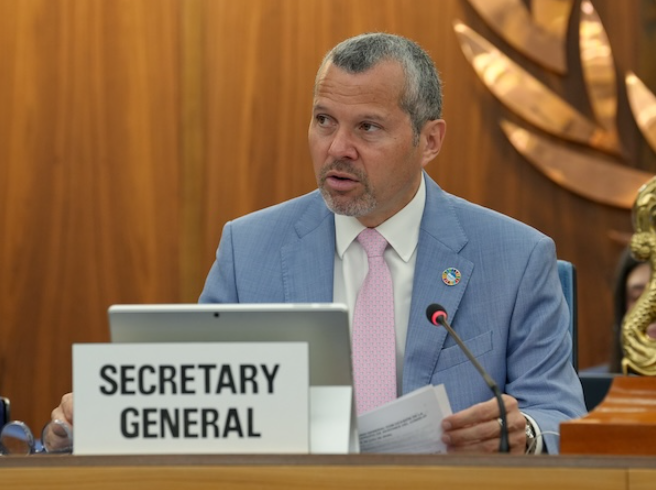
Arsenio Dominguez said: "We have now reached a point where various conflicts are being used as a pretext for attacking commercial ships and innocent seafarers. Conflicts must never be used as a reason to harm innocent seafarers."
Since the outbreak of conflict in the Middle East on February 28, the International Maritime Organization has verified 80 attacks on international shipping in and around the Strait of Hormuz, resulting in at least 22 seafarers dead and many others injured.
In the Black Sea and the Sea of Azov, attacks on international shipping in recent months have killed dozens of people, though the exact casualty figures are difficult to verify.
Attacks in the Red Sea are once again on the rise. On August 11, the Houthis attacked a commercial ship, which has been confirmed to have caused 4 deaths.
Arsenio Dominguez emphasized that the attacks in these conflict settings are not carried out by a single party. He pointed out: "In the Strait of Hormuz, it is not just one country attacking commercial ships; the same is true in the Black Sea and the Sea of Azov."
Arsenio Dominguez also explained that addressing the root causes of geopolitical conflicts is not within the mandate of the International Maritime Organization, but the impact of conflicts on global maritime trade and shipping operations is becoming increasingly prominent. He urged the delegates present to convey these negative effects on the shipping industry to their own governments and appropriate international forums. Once shipping is disrupted, its consequences will extend far beyond the maritime industry itself, affecting national economies, global supply chains, and the daily lives of ordinary people.
He stressed: "I call on all of you to report the above-mentioned impacts to the relevant institutions in your countries so that the issue can be properly addressed within the United Nations framework. ... Exploring the root causes and finding solutions requires the joint efforts of all delegates, national governments, and relevant United Nations agencies."
The Secretariat of the International Maritime Organization is ready to support member states in developing feasible shipping industry solutions at the technical and operational levels.
Hot News