


The Outcome Will Be Revealed on October 1! German Ports Brace for an Indefinite Strike
Source:
2026-09-17
The strike at German ports is intensifying.
Verdi, the German services trade union, said on Tuesday (September 15) that after the latest pay offer from port employers was rejected, unionized port workers in Germany will vote on October 1 on whether to take strike action.
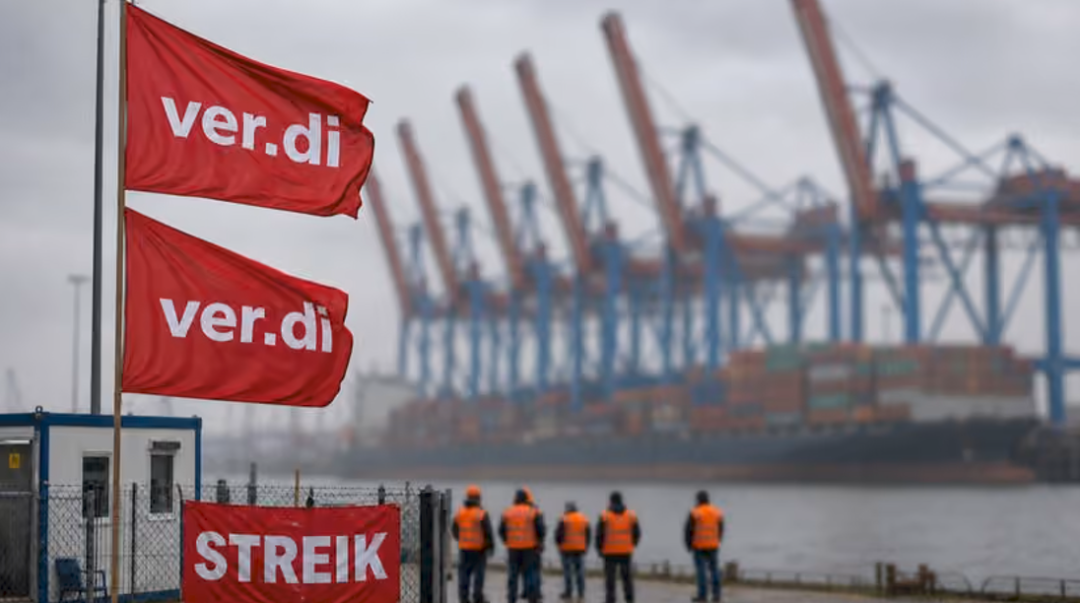
The union said in a statement: “If at least 75% of members vote in favor of rejecting the offer and launching an indefinite strike, the union’s federal collective bargaining committee will decide when to act.”
This development means that, if sufficient support is secured, an indefinite strike could break out at major German seaports, potentially further worsening port congestion and weighing on schedule reliability on major trade routes. These routes have already fallen to low single-digit levels.
After a fourth round of negotiations, Verdi said the latest offer from the Central Association of German Seaport Companies (ZDS) included a 3.4% increase in hourly wages, but among more than 5,500 employees who took part in the vote, 64.7% (3,578) voted against it. ZDS represents port employers in Hamburg, Bremen, Bremerhaven, Emden, Brake and Wilhelmshaven.
ZDS also proposed raising holiday allowances by $231 and adding an additional annual one-time payment of $480 for employees of major terminal operators, starting January 1, 2027.
This new ballot on strike action is the latest development in the protracted dispute. Verdi had already staged a 24-hour strike on August 17, and then called for a two-day stoppage earlier this month.
Verdi’s chief negotiator, Sylvi Krisch, said that in the latest round of talks, ZDS proposed a 12-month contract for all 11,000 port employees, rather than a 19-month contract, which partially met the union’s demands, but wage protection for low-paid members was still missing.
Krisch also said employers had repeatedly said there was no room for a higher pay offer. The union is demanding an 8.2% increase in hourly wages, or at least $2.90 more per hour, to protect the purchasing power of low-paid workers from the cumulative effects of the rising cost of living.
Hot News