


Just After a Successful Maiden Voyage, Is the Shipowner Already Looking to Sell the Vessel?
Source:
2026-11-18
While major South Korean shipping companies have taken a wait-and-see approach toward Arctic route trials, Kim Hyun-gyum, Chairman of PanStar Group, has stepped forward in the hope of opening new development opportunities for the Korean shipping industry through this new route.
However, a gap remains between ambition and reality. During the trial voyage, the group’s container ship encountered extensive floating ice, and the crew once considered turning back. After completing the round trip, the maiden voyage reportedly recorded a loss amounting to billions of won. PanStar is now even considering selling or chartering out the trial vessel and readjusting its follow-up Arctic route operating plan.
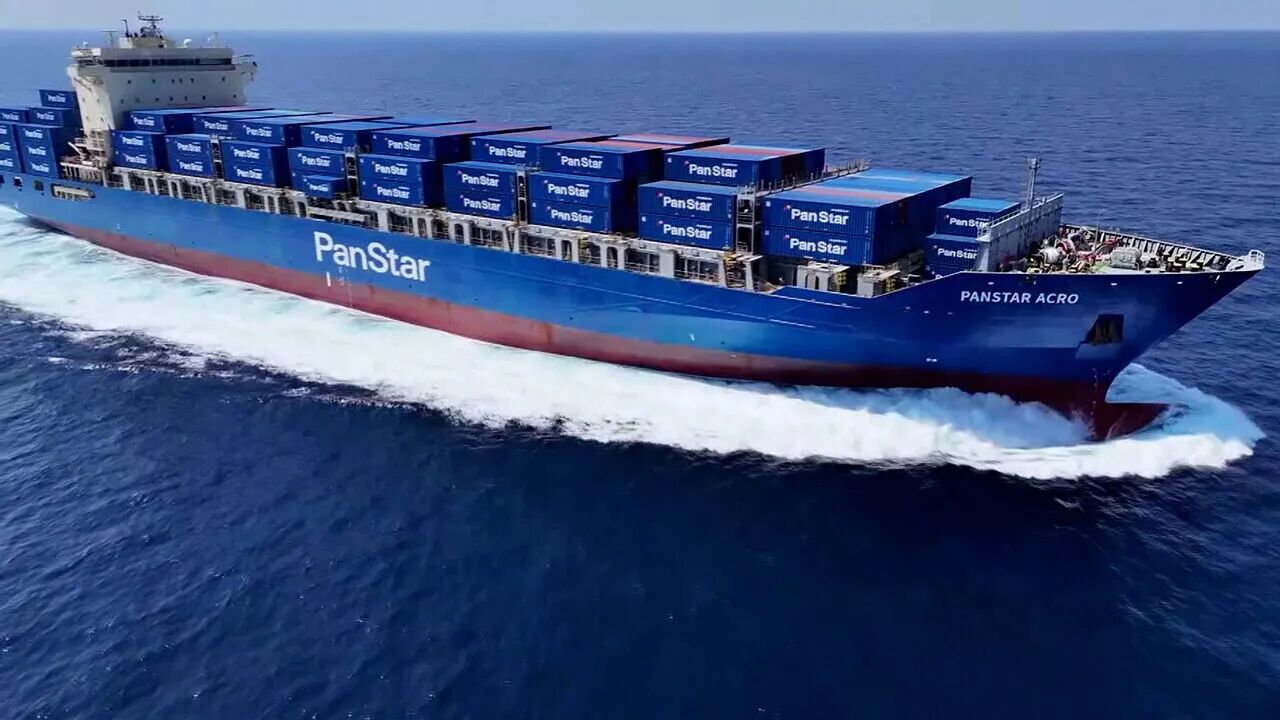
Betting on the Arctic Route Against the Odds
PanStar Group’s container vessel PanStar Acro departed from Busan New Port on August 22, 2026, sailed via the Northern Sea Route to Europe, and returned to Busan on October 11, completing the first round-trip Arctic trial voyage by a South Korean container ship. The entire voyage lasted 50 days.
Behind this trial lies Chairman Kim Hyun-gyum’s strategic ambition for the Arctic route. In an interview with Korean media on November 2, Kim recalled that in May this year, the Korea Ocean Business Corporation and the Korean Shipowners’ Association launched a call for companies to participate in Arctic route trial voyages. At the time, even large Korean shipping companies were hesitant, concerned about whether shippers would provide cargo, whether the voyage could be profitable, and the serious losses that might arise in the event of an accident.
Kim ultimately decided to take on the task, stating, “Someone has to do it.” After persuading the company’s management, PanStar agreed to participate. In his view, the voyage was not merely a route verification exercise, but an effort to open an important corridor for the Korean shipping industry that could help reshape global logistics patterns.
Kim hopes that, as security risks around the Red Sea and the Suez Canal increase, the Arctic route can become a new transport option between Asia and Europe. For PanStar, it is also an opportunity to gain first-mover advantage and expand its business scope.
To achieve this goal, PanStar had to handle complex diplomatic and administrative procedures before the trial voyage. Kim revealed that the company needed to obtain prior permission to transit Russian territorial waters within 12 nautical miles of the coast, as well as relevant compliance documents from the U.S. Treasury’s Office of Foreign Assets Control regarding U.S. dollar remittances and Russia-related sanctions.
Because extensive floating ice and other emergencies could force the vessel into Russian territorial waters in search of a safe passage, PanStar engaged local agents in the United States and Russia in advance and worked with institutions such as the South Korean Ministry of Oceans and Fisheries to complete the required documentation.
Encountering Extensive Floating Ice, Turning Back Was Once Considered
Despite thorough preparation, PanStar Acro still encountered significant difficulties during the actual voyage.
Between August 31 and September 1 local time, the vessel encountered large amounts of drifting ice in the waters south of Wrangel Island in the Chukchi Sea. As the ice continuously shifted, visibility ahead was severely affected, and the crew could only rely on radar to assess surrounding conditions.
Captain Seo Myung-won said the crew once considered turning back. After communicating with ice navigators, he decided to pause the vessel’s advance and wait until daylight to reassess the route. About three hours later, as visibility improved, the ship was able to identify a passable route.
This episode was also reflected in the vessel’s AIS track. Data analysis by the Centre for High North Logistics, based on Kpler and MarineTraffic information, showed that PanStar Acro repeatedly reduced speed and adjusted course during this period, covering only about 16 nautical miles westward over several hours and adding approximately eight hours to the voyage.
The vessel also encountered substantial floating ice near the Vilkitsky Strait, while extreme low temperatures caused problems with the fuel oil and lubricating oil circulation systems.
Ultimately, the ship completed the round-trip Arctic voyage without icebreaker assistance, but the experience also exposed limitations in its ability to sustain continuous polar operations.
Maiden Voyage Losses Reach Billions of Won; Shipowner Considers Selling the Vessel
Beyond the navigational challenges, the commercial performance of the trial voyage was also disappointing.
PanStar Acro carried only 737 TEU of export cargo on the outbound leg, mainly chemicals, used cars and automotive parts, far below the initial target of 1,300 TEU. On the return leg, it carried 1,743 TEU of empty containers and failed to secure import cargo. The vessel’s capacity is 2,758 TEU.
To support the trial, the Korean Shipowners’ Association provided a basic voyage subsidy of 3 billion won and offered an additional reward of up to 1 billion won based on round-trip cargo volumes.
Nevertheless, the trial reportedly incurred losses amounting to billions of won. Kim said the larger vessel used for this voyage carried a relatively heavy fuel cost burden. In the next phase, the company plans to switch to more economical small and medium-sized ice-class container ships, and to improve the route’s profitability by increasing summer voyage turnaround rates and seeking time-sensitive freight premiums.
Under the original plan, PanStar considered arranging up to three voyages in the summer of 2027, gradually moving toward regular operations.
However, just two weeks later, PanStar began considering selling or chartering out PanStar Acro and acquiring a vessel with stronger ice-navigation capabilities and better fuel economy. Korean media reported that the ship’s previous owner, HMM, could be a potential buyer, and the two sides are currently negotiating price, although no deal has yet been reached.
This suggests that PanStar may need to replace the vessel in order to continue advancing its Arctic route project. The consideration of selling PanStar Acro is linked to Kim’s earlier proposal to adjust vessel type, but it also reflects the need for companies to reassess vessel configuration and operational economics after completing the first trial voyage.
Multiple Challenges Remain Before Regular Operations Can Be Established
In fact, Kim’s vision for the Arctic route is not limited to completing one or two trial voyages. He hopes that, through early corporate exploration, a stable transport service can gradually be established and regarded as an important component of South Korea’s national logistics security system.
However, judging from PanStar Acro’s first trial voyage, the commercialization of the Arctic route still faces multiple practical challenges.
First, uncertainty surrounding ice conditions remains a major factor affecting navigation efficiency. Even within the summer navigation window, drifting ice, floating ice distribution and changing visibility may force vessels to slow down, wait or adjust their routes, thereby affecting schedule reliability. At the same time, extreme low temperatures place higher demands on ship equipment, fuel systems and crew operations; having a certain ice class does not mean a vessel can adapt to all polar navigation conditions.
Second, cargo organization and round-trip loading rates directly affect the route’s commercial viability. PanStar Acro carried export cargo on the outbound leg but mainly empty containers on the return, indicating that the Arctic route still needs to develop stable two-way cargo flows. For container liner services, shorter one-way sailing times are certainly important, but if return cargo is insufficient, empty container repositioning and vessel operating costs will continue to weigh on overall profitability.
In addition, factors such as the Arctic route’s seasonal navigation window, insurance costs, port and emergency support facilities, and transit permissions for waters along the Russian coast must all be incorporated into long-term operating cost assessments.
Hot News