


Annual Volume of Yantai Port's China‑Africa Break‑Bulk Route Tops 6 Million Tons
Source:GANGKOUQUAN
2026-08-19
Recently, a cargo vessel carrying 558 units of mechanical vehicles and complete sets of construction engineering materials departed from Shandong Port's Yantai Port for Ghana, West Africa. This marks the first time that the annual shipment volume of Yantai Port's China-Africa break-bulk cargo liner service has exceeded 6 million metric tons, reaching the milestone four months ahead of schedule and surpassing the full-year target of 5.81 million tons set for 2025. The volume represents a year-on-year increase of 66.1%, with an average of 30 sailings per month—the highest frequency among such services nationwide—further solidifying the two-way corridor that connects China's advanced manufacturing capacity with Africa's development needs and contributing Shandong Port's strength to the high-quality development of the Belt and Road Initiative.
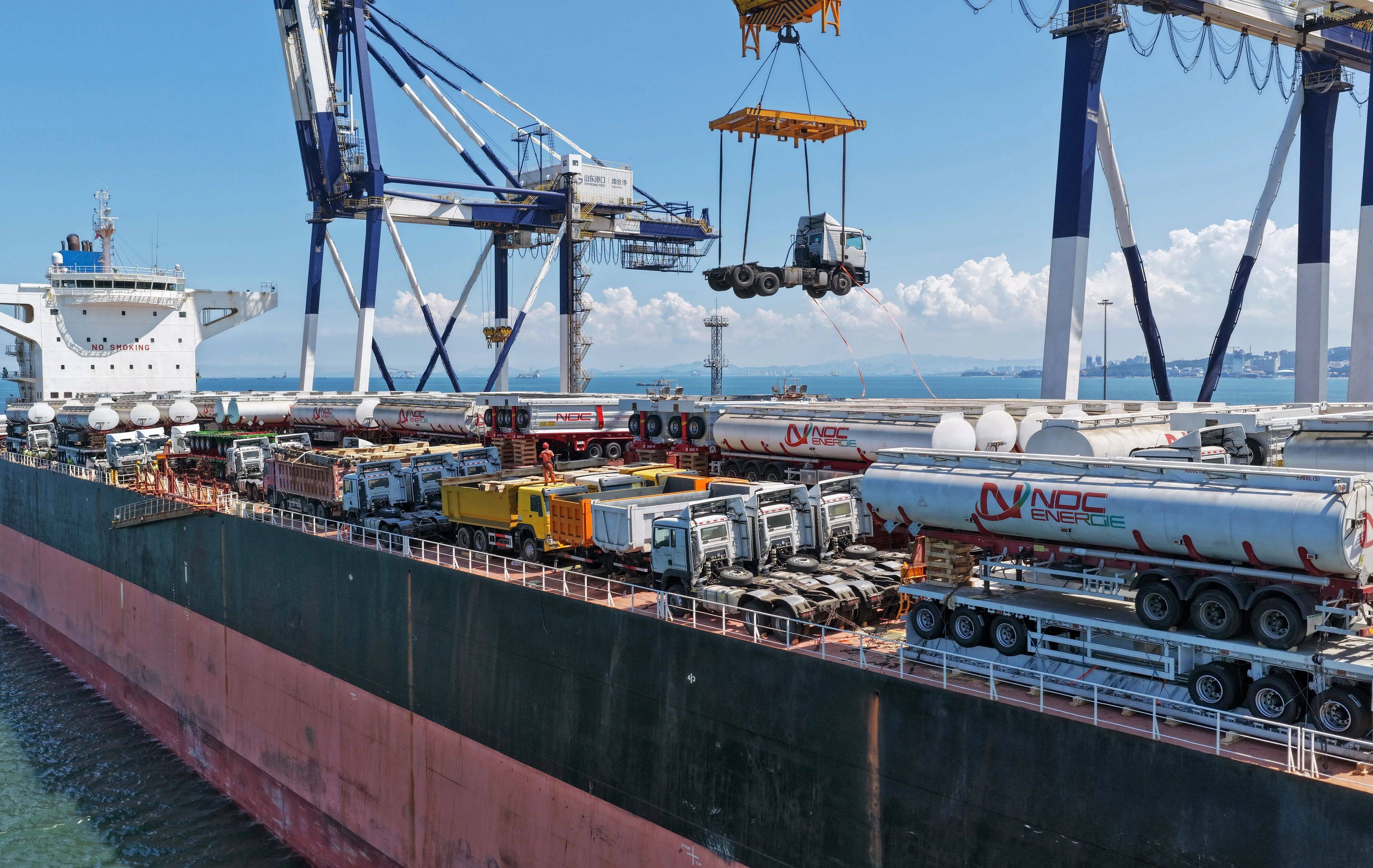
In recent years, as Africa enters a critical phase of industrialization, demand for port equipment, construction machinery, and energy infrastructure has surged, leading to a concentration of project cargo and engineering goods shipments. Chinese-made products continue to gain traction in overseas markets. As a break-bulk cargo base for Shandong Port and a major logistics hub for such cargo in northern China, Yantai Port has repositioned itself as the "Golden Corridor for China-Africa Logistics." Seizing policy opportunities and market momentum, the port launched four new routes in 2026—to Algeria, Dakar, Namibia, and Djibouti—successively building a land-sea intermodal logistics network that "connects the Yellow River basin in the west, reaches along the Yangtze River in the south, links the Northeast hinterland in the north, and directly serves more than 20 African countries and regions." This network has become a friendly bridge and an express maritime highway for deepening China-Africa economic and trade cooperation.
During vessel operations, Yantai Port collaborated closely with port authorities including Yantai Customs, the Maritime Safety Administration, the Exit-Entry Border Inspection Station, and the Yantai Pilots Station to ensure smooth cargo export chains from domestic industrial clusters to the port and onward to African end-users. Yantai Port's Uni-International Break-Bulk Terminal Company set up a dedicated task force for each vessel to address challenges such as complex vehicle categories and heavy-lift items. Leveraging "One Platform, Five Centers, and Five Systems," with full coverage of AI stowage planning, smart dispatching, and intelligent tallying, the port achieved intelligent coordination across cargo, yard, vehicles, and vessels, as well as low-carbon operations throughout the entire logistics chain. While ensuring safety, the port minimized vessel turnaround time, achieved zero stowage errors, and maintained a 100% fulfillment rate, earning high praise from cargo owners and shipping lines for loading quality and efficiency, further enhancing the "ALL-LIFT Uni-International" service brand.
This year marks the start of the 15th Five-Year Plan period and the 70th anniversary of the establishment of diplomatic relations between China and African countries. As the first Chinese port to build a port in Africa, Yantai Port closely follows Shandong Port's three strategic directions—"expanding seaward, deepening along the supply chain, and empowering industry"—and precisely aligns with the economic development needs of African nations. Building on its "bauxite–break-bulk" circular shipping model, Yantai Port leverages the empty return capacity of vessels to deliver project materials, machinery vehicles, construction supplies, agricultural fertilizers, and over 200 other categories of production and daily necessities to Africa. According to customs statistics, from January to July, the two-way "bauxite–break-bulk" liner service between Yantai Port and Africa handled 44.806 million metric tons, a year-on-year increase of 23.5%, surpassing the 40-million-ton mark two months earlier than last year, and continuing to rank first among all Chinese ports in trade with Africa.
Hot News