





Soaring 70% in Five Years: Preventable PSC Detentions on the Rise
Source:CNSS
2026-06-09
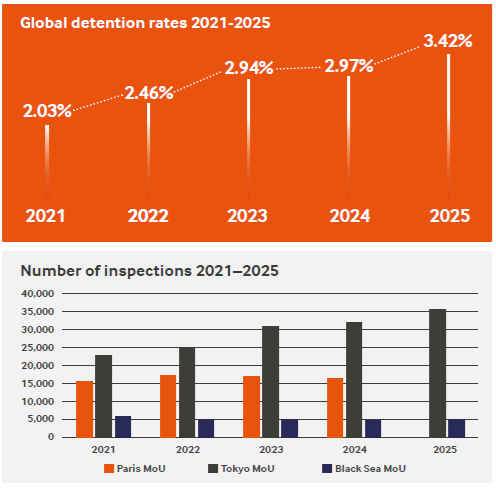
A new white paper from Survitec, a UK-based safety and survival solutions provider, reveals that Port State Control (PSC) detention rates have risen by approximately 70% over the past five years, despite inspection numbers remaining broadly flat. The majority of detentions are not caused by sudden, severe, or catastrophic equipment failures but stem from systemic management failures that could have been identified and prevented.
Based on data from the major PSC regimes, the report finds that detention is no longer a rare event confined to "problem vessels"—any ship, of any type and any age, is at risk. Currently, only half of all inspections result in a zero-deficiency clearance, and over the next three years, one in every seven merchant vessels is projected to be detained at least once. The data shows that most detained vessels are held only once, meaning the rising detention rate is not driven by "repeat offenders."
According to the report, global inspection numbers have plateaued at around 75,000 per year since 2023, yet detention outcomes have worsened.
The Tokyo MoU and Paris MoU, covering the busiest shipping routes, together account for over 80% of global PSC inspections and detentions. Over the past five years, detentions under the Tokyo MoU have surged dramatically, doubling from 526 in 2021 to 1,255 in 2025. The Paris MoU detention rate has held at around 4%, above the global average, while the Black Sea MoU recorded the highest detention rate at 6.8% of inspections, partly due to a higher concentration of older vessels in the region.
Vessel age is the single strongest predictor of detention risk across all MoUs, with the risk rising significantly at 15 years of age and intensifying further at 20 years. The average age of the global fleet is steadily increasing, driving higher deficiency numbers: the proportion of vessels aged 25 years and older rose from 36% in 2014 to 44% in 2024, as owners hold onto tonnage longer, hoping to wait out high newbuilding prices and uncertainty over future fuel choices.
Top Categories Leading to Detentions
Over the past five years, the main trends in PSC detentions include:
Major Safety Deficiencies as the Leading Cause of Detention
Fire safety and life-saving appliances remain the high-frequency, high-impact key factors. These not only directly affect a vessel's core safety status but are also seen as reflecting persistent shortcomings in maintenance and crew training.
Regulatory Focus Shifting to "Systemic Failures"
As the ISM Code increasingly takes a central role in safety management, PSC enforcement emphasis appears to be moving from a mode based on specific deficiencies to one focused on the effectiveness of management systems.
Correlation Between Life-Saving Appliance Deficiencies and ISM Code Non-Conformities
Most detentions involving life-saving appliances are linked to inadequate maintenance systems, a lack of inspection protocols, and insufficient crew training. The risk of detention is highest when life-saving appliance deficiencies coincide with weak management systems.
Furthermore, Survitec, using data from the RISK4SEA report, identifies the most common deficiencies leading to detention over a six-month period in 2025.
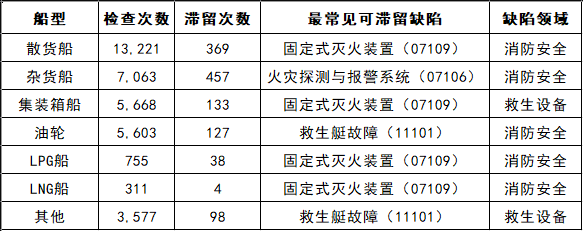
Over the years, the principal types of detainable deficiencies have changed little. Inspectors consistently focus on ISM Code non-conformities, fire safety, and life-saving appliances—in short, basic safety fundamentals. Survitec notes that most detentions result from systemic, preventable maintenance and crew training failures rather than sudden equipment breakdowns.
Many of the deficiencies found are not merely compliance issues but directly relate to the operational readiness of fire safety and life-saving systems, raising concerns about a vessel's ability to respond effectively in an emergency.
Separately, Survitec has also flagged a regulatory gap it has raised at the International Maritime Organization level through the International Life-Saving Appliance Manufacturers Association. While current regulations mandate periodic replacement of lifeboat launching falls and hooks, they set no mandatory replacement intervals for chains and connecting components within the lifting apparatus. These parts can remain in service for 15 to 25 years, covering almost the entire commercial lifespan of many vessels. Survitec recommends replacement or inspection of these components every five years.
Hot News